
What to Expect from Telehealth Consultations
Prepare for a remote GP discussion and understand assessment, next steps, documentation and the limits of remote care.

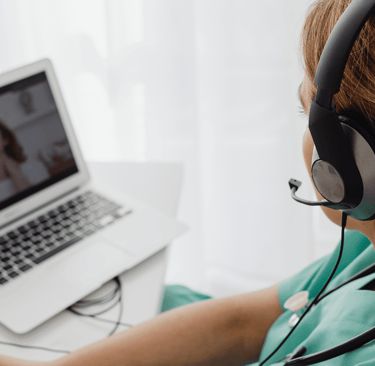
A remote GP consultation offers a way to discuss a health concern using the agreed telephone or video arrangements. Understanding the process can help residents, families and care teams prepare.
Before the consultation
Use the clinical contact route agreed with the home.
Explain communication or accessibility needs in advance where possible.
Have relevant information available through the agreed secure arrangements.
For video consultations, check the device, connection, lighting and privacy.
Agree how care staff or family members will support participation, respecting the resident’s wishes and applicable consent arrangements.
During the discussion
The GP assesses the information available and advises on appropriate next steps. Ask for clarification if the plan is unclear. Remote assessment is not suitable for every concern, and the GP may advise that further assessment is needed.
After the consultation
Documentation and any necessary handover follow the agreed clinical arrangements. Discuss access, responsibilities and follow-up during onboarding.
A consultation does not automatically mean that a prescription, physical visit or investigation will follow. The plan depends on clinical assessment and the agreed service scope.
Discuss additional GP access
RTCGP offers additional private GP access for care homes during agreed out-of-hours periods, alongside the resident’s usual GP and existing NHS services. Service hours, availability and scope are agreed with each home before the service begins.
The service is remote-first. Where an in-person assessment is needed, the appropriate route will be advised. Any privately arranged visit is subject to clinical need, location, availability and separate agreement.
A GP may prescribe following assessment where clinically appropriate and within the agreed clinical-provider arrangements. A consultation does not guarantee a prescription or immediate access to medicines.
RTCGP is not an emergency service. For a life-threatening emergency, call 999. Do not delay urgent or emergency care while waiting for an RTCGP response. Follow your home’s existing escalation procedures.
Book a care-home discussion to explore the support your home needs. This is a business introduction, not a medical consultation; do not submit identifiable resident information.
Contacts
+44 7551269003 director@rtcgp.co.uk
RTCGP
Additional private GP access for care homes during agreed out-of-hours periods, alongside existing NHS services.
Availability is confirmed for each home. RTCGP is not an emergency service.

